News ·

The Used Car Market Has Quietly Split in Two

For a long time, the used car market in Australia behaved predictably. If a car didn't sell, the price came down. Simple. That's no longer the case.

Over the past 30 days, the data is showing something different: not a market that's rising or falling, but one that's splitting.

One market, two directions

The market isn't moving together anymore. It's dividing.

On one side, certain vehicles are tightening:

  • Prices are holding firm or even increasing
  • Stock levels are shrinking
  • Dealers are showing confidence

On the other:

  • Prices are being reduced
  • Vehicles are sitting longer
  • Supply is building

This isn't noise. It's demand repositioning in real time.

Buyers are changing how they decide

The biggest driver right now isn't brand or badge. It's running cost.

Fuel prices and broader cost-of-living pressure are influencing decisions more heavily than before. Buyers are becoming more selective, and that selectiveness is showing up immediately in the data.

Vehicles that are cheaper to run are attracting stronger demand. Vehicles that aren't are being left behind.

And unlike previous cycles, this shift isn't gradual. It's happening quickly.

The signal in the data

EVs aren't outselling petrol, but they're moving nearly 3x faster than their share of supply would suggest.
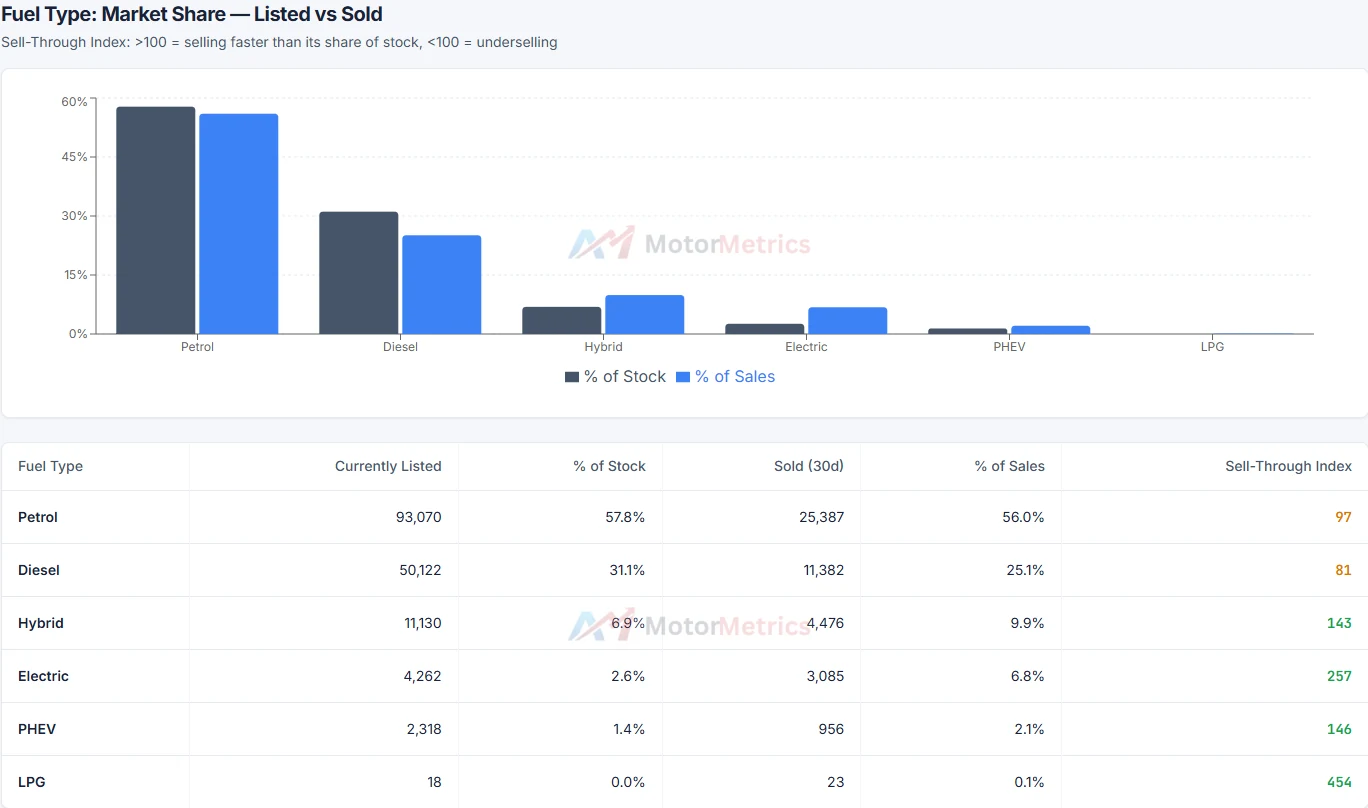
Fuel type share of stock against share of sales, with a sell-through index: electric 257, hybrid 143, petrol 97, diesel 81
Share of stock against share of sales by fuel type, April 2026. Over 100 means selling faster than its share of stock.

That's the clearest signal in the market right now.

Demand is concentrating, and supply hasn't caught up.
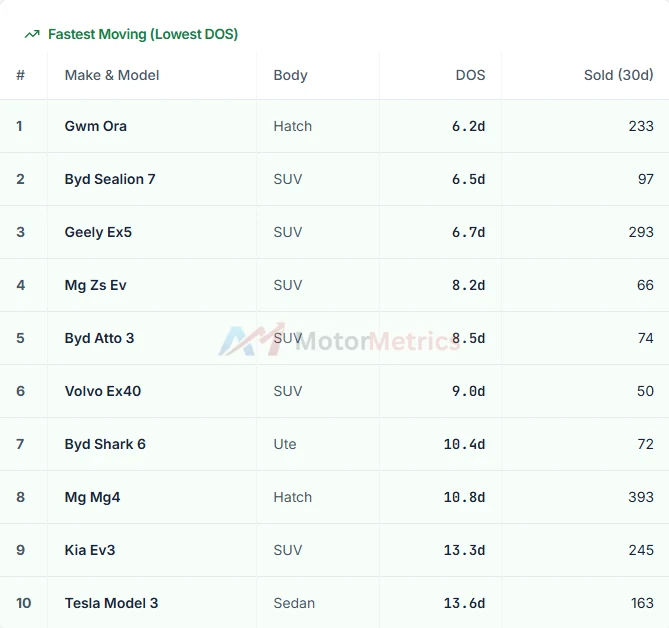
The ten fastest-moving models by days of supply, April 2026, led by the GWM Ora, BYD Sealion 7 and Geely EX5
Fastest-moving models by days of supply, April 2026.

The takeaway

This isn't just a pricing trend.

It's a shift in how the market behaves, and it's happening in real time.
News

Market notes

October 2026: Prices eased faster, and cars took longer to sell

Prices for the same kinds of car fell 1.6% in October, against 0.7% in September, and the median car took 40 days to sell. 40.2% of cars had their advertised price cut before they sold. Cars that sold without a cut went in 23 days, against 68 after one.

Read it →

September 2026: Still slipping, just more gently

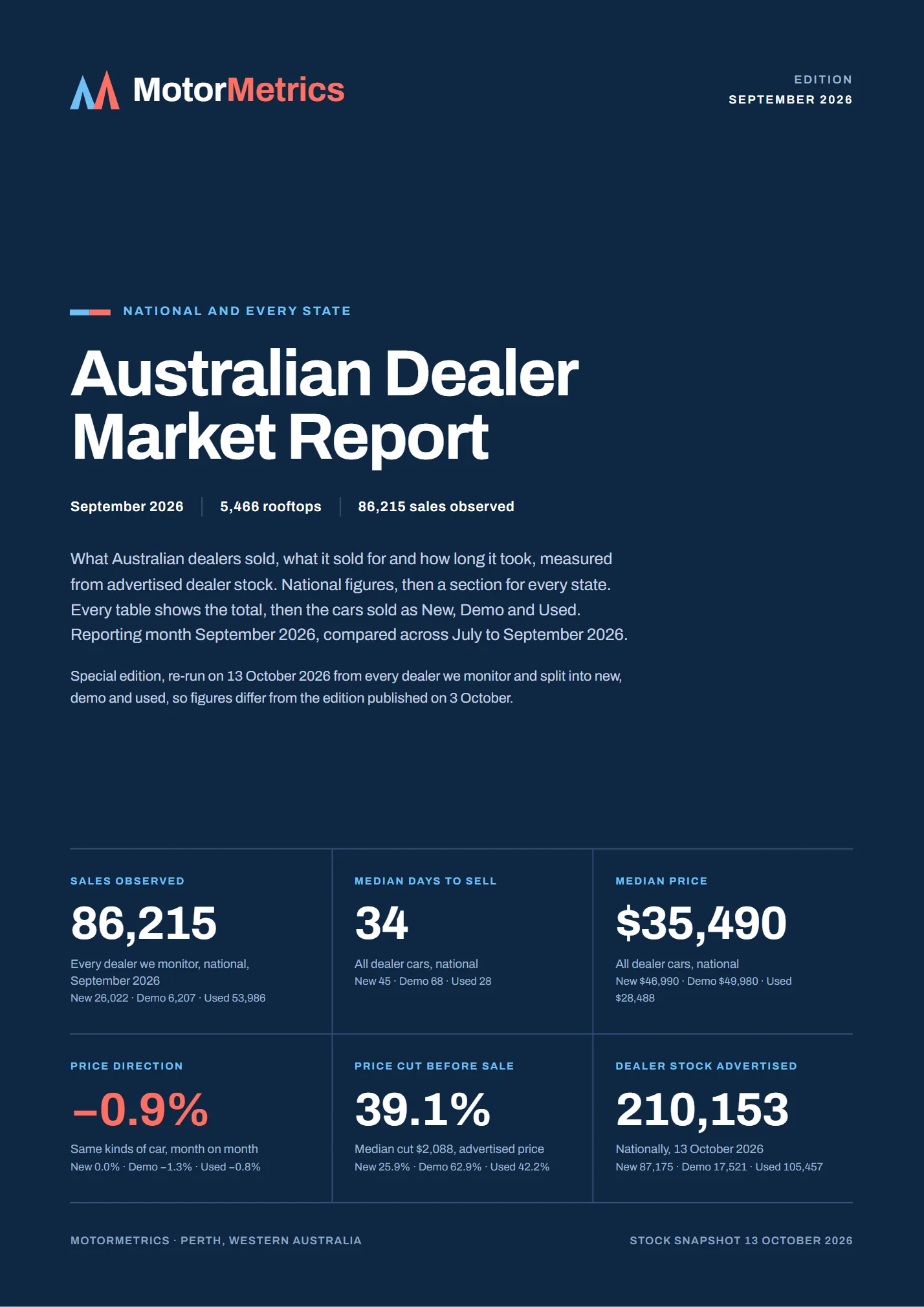
Prices for the same kinds of car eased 0.9% in September, a softer fall than August's 1.5%, and the share of cars that had their advertised price cut before they sold held at 39.1%. Cars that sold without a price cut went in 18 days, against 64 after a cut.

Read it →

Next

August 2026: A market that's moving, just not upward

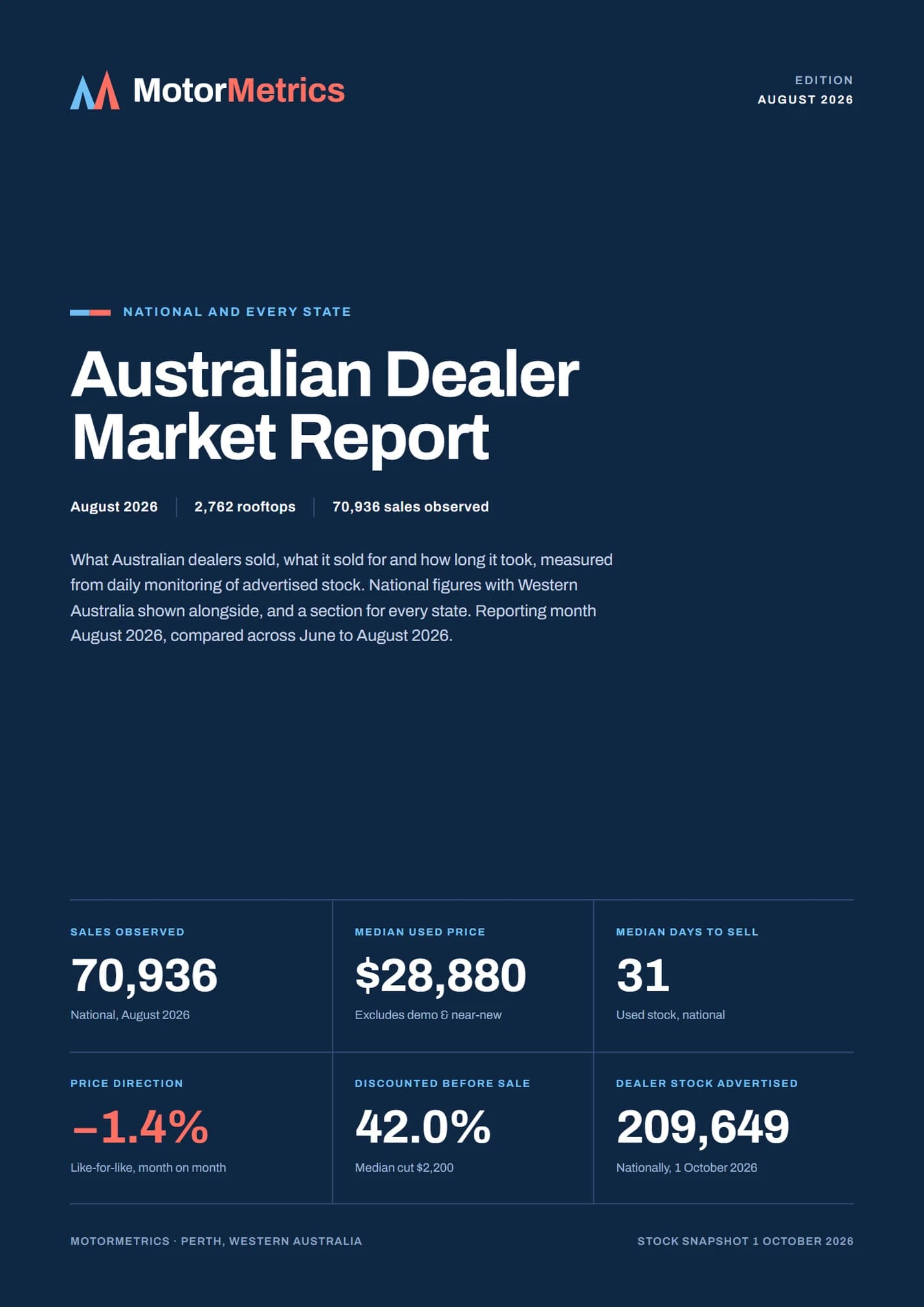
Dealers sold plenty of cars in August and made slightly less on each. Like-for-like prices slipped 1.4%, and repriced cars took nearly four times as long to sell.

Read it →

Previous

Is the Fuel Situation Starting to Affect the Used Car Market?

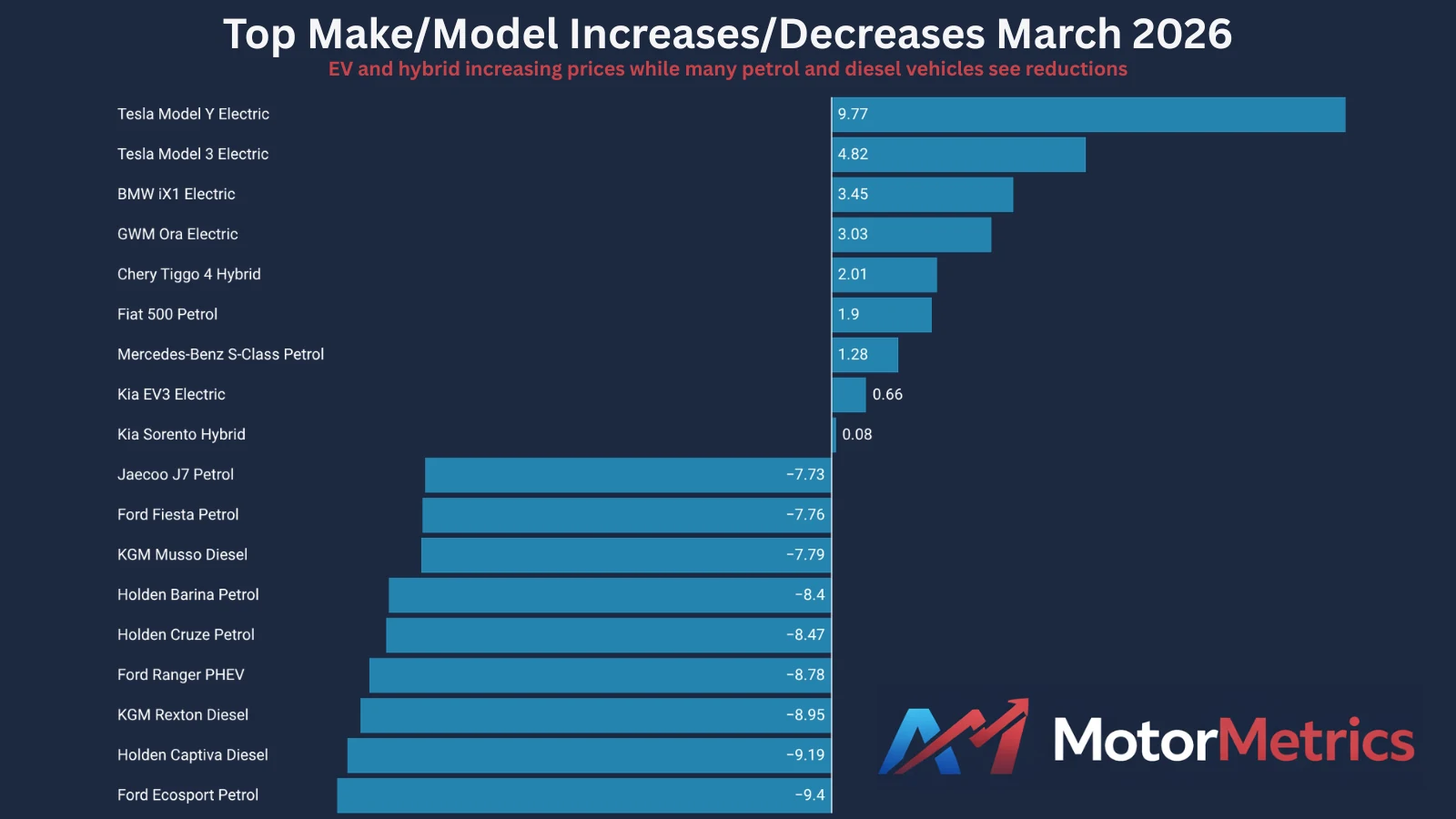
Recent listing price behaviour suggests fuel costs and running expenses may be starting to influence used vehicle pricing, with different fuel types and segments showing different repricing patterns over a short period.

Read it →

See it on your own stock

Book a 30-minute demo and we’ll pull up your yard. If we already monitor your website, your cars are in the app the moment you’re approved.

Read the market report →

Early access for dealers and data partners. We onboard by hand, and your first 14 days are free.